News

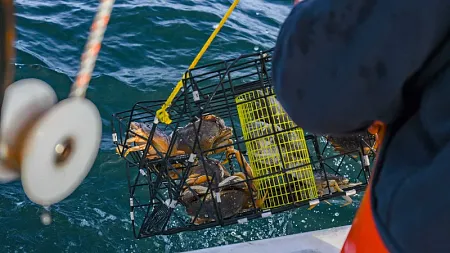
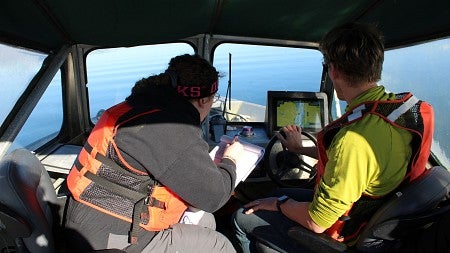
BIOLOGY - Marine biologist Alan Shanks has a simple trap that allows him to predict the amount of Dungeness crab will be available for fisherfolk. For the past 25 years, Shanks has compared the yields of the winter commercial catch to the baby crabs his water-jug trap collects each summer. He’s found that the number of baby crabs that arrive on the coast can be used to estimate the size of the state’s commercial harvest of adult Dungeness crab years in the future, with a 12 percent margin of error.
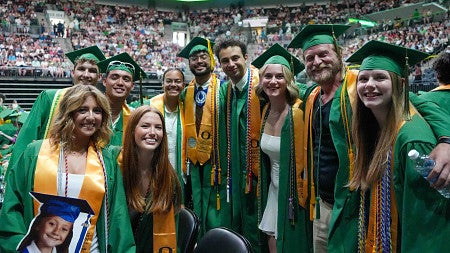
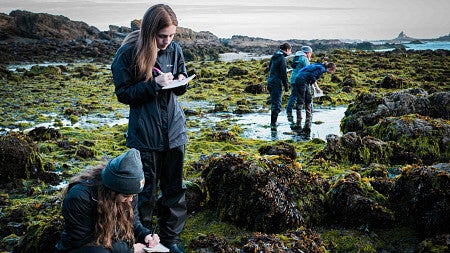
BIOLOGY - New in 2025, the Coastal Quarter program allows undergraduates from all majors to spend winter term living at the coast and taking classes in marine biology, environmental studies, anthropology and science communication. Out of the nine students who participated this year, five are majoring in either environmental sciences or environmental studies; four are marine biology majors; and one is a sports journalism major.
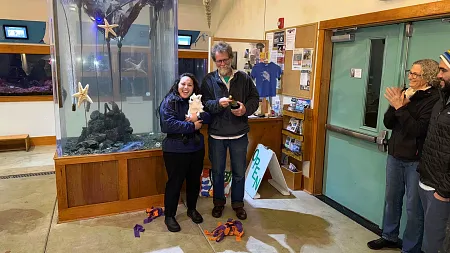
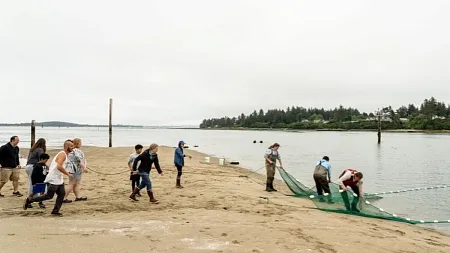
OIMB, BIOLOGY - At the Charleston Marine Life Center a growing collection of unique organisms serve as underwater ambassadors between UO researchers, local community partners, and the public. It’s a place where UO scientists share their discoveries with the public and community members rally around the preservation of local marine life.
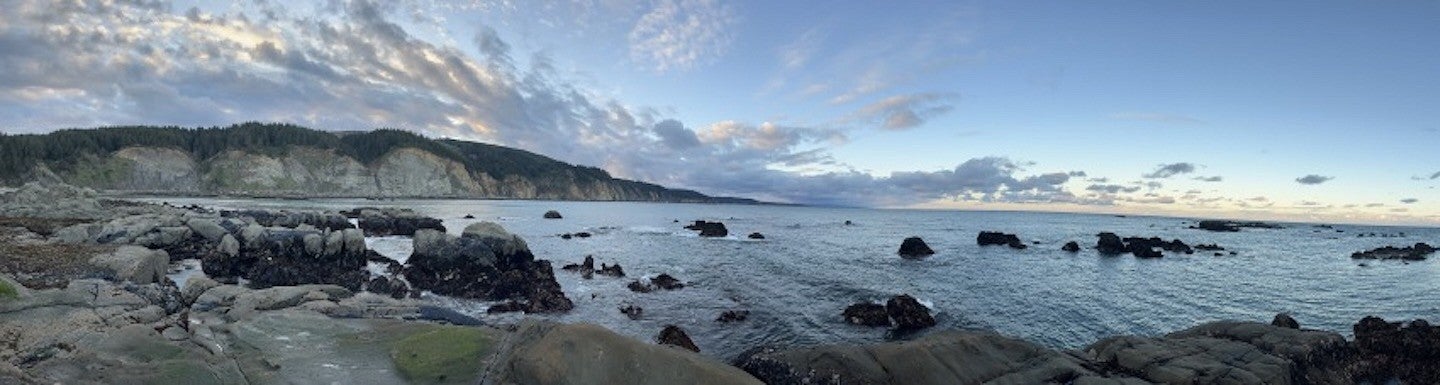
ANTHROPOLOGY, BIOLOGY, EARTH SCIENCES - Students in the College of Arts and Sciences have the opportunity this winter to take classes on the picturesque Oregon Coast at the Oregon Institute of Marine Biology.
BIOLOGY, OREGON INSTITUTE OF MARINE BIOLOGY - Scientists at the University of Oregon have discovered that colonies of gelatinous sea animals swim through the ocean in giant corkscrew shapes using coordinated jet propulsion, an unusual kind of locomotion that could inspire new designs for efficient underwater vehicles.
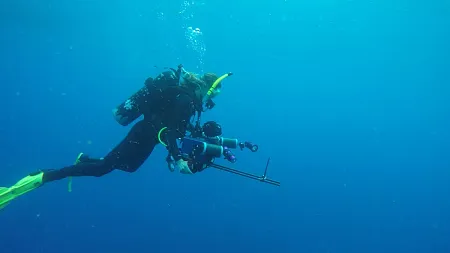
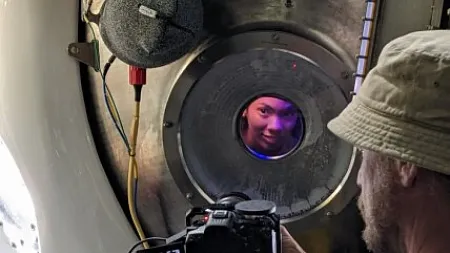
BIOLOGY - Marine biology students searched the Atlantic Ocean for rare organisms that thrive without sunlight. An upcoming IMAX film will document their journey—and, they hope, inspire a new generation of women scientists. Read more in the CAS Connection newsletter.
EARTH SCIENCES, OREGON INSTITUTE OF MARINE BIOLOGY - While cruising the Pacific Ocean looking for deep-sea creatures to study, a UO undergraduate researcher got more than he bargained for—rare ash samples from an underwater volcanic eruption 62 miles away.