
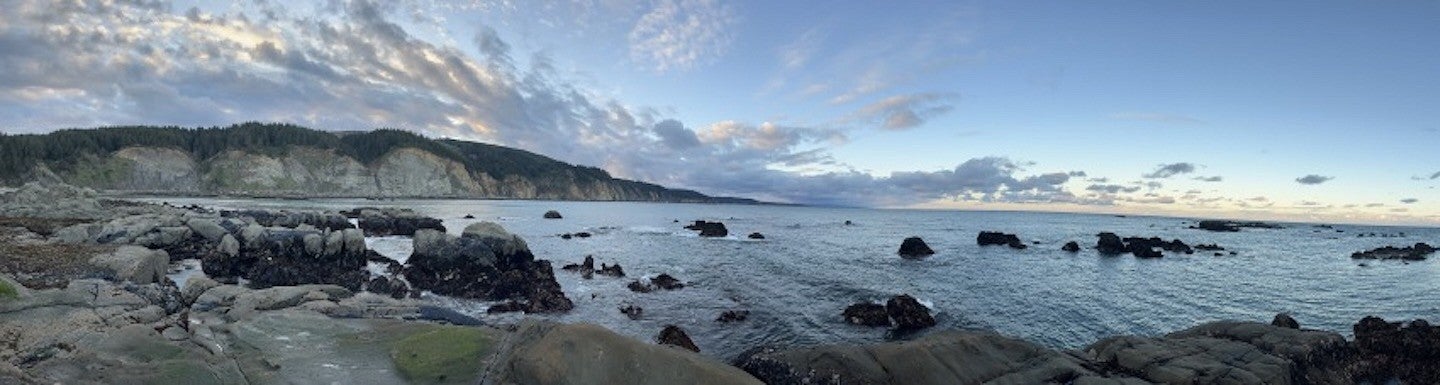
The Virtual Field Trip Project is an initiative designed to make Oregon’s rocky intertidal ecosystem more accessible to students, educators, and the public. Students from the Oregon Institute of Marine Biology (OIMB) used a variety of 3D modeling and photogrammetry software to create detailed digital models of coastal shoreline environments. These models allow viewers to explore the structure and organisms of the intertidal zone in an interactive, virtual format.
Rocky shorelines are some of the most dynamic and biologically rich habitats along the Oregon coast, but they can also be difficult to access. Field trips to these environments often depend on tides, weather conditions, mobility, and geographic location. This project was created to help reduce those barriers by providing a digital alternative that allows users to explore these habitats remotely.
The virtual models are paired with supplemental materials that highlight key ecological features and organisms commonly found in the intertidal zone. Together, these resources can be used as a virtual field trip, allowing learners to observe coastal environments, identify species, and understand ecological relationships without needing to physically visit the site.
This project can support a variety of uses. Instructors can incorporate the models into classroom lessons, outreach programs, or pre-field trip preparation. Students can use them to study habitat structure, practice species identification, or explore coastal ecology at their own pace. The models also provide an opportunity for anyone interested in marine environments to experience the Oregon coast virtually.
The idea for the Virtual Field Trip Project was conceptualized by Dr. Rowan McLachlan. The 3D models and supporting materials were created by Aiden Kubitz and Amaya Kelly, students at the Oregon Institute of Marine Biology.