
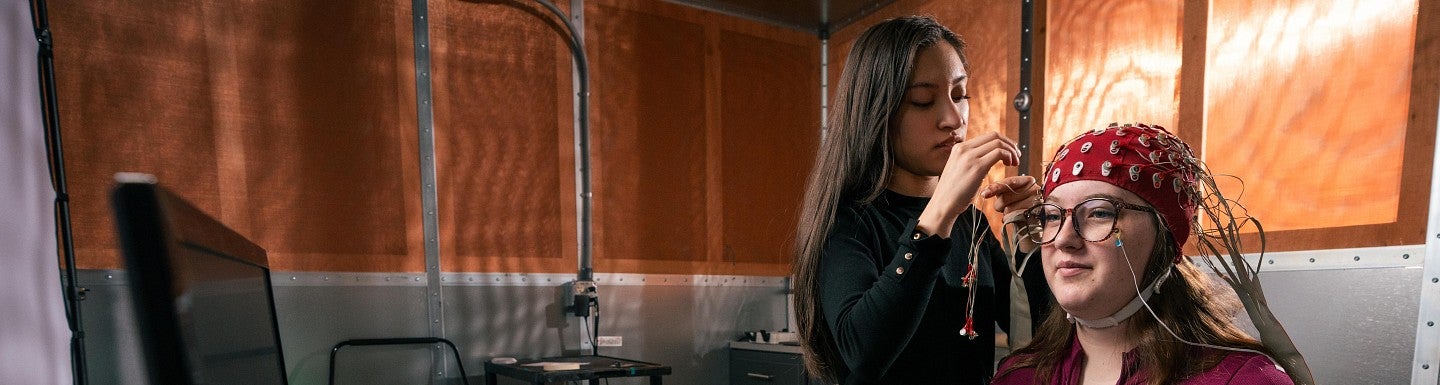
Our science departments are committed to creating and disseminating new knowledge in their fields by combining research and teaching. Our 300 faculty members—including fellows of many learned societies and academies—are engaged in research that spans a broad range, from questions about the foundations of quantum mechanics, to the development of cancer cells and the workings of the brain, to work resulting in the spin-off of high-technology companies. Faculty share their excitement about their research with their students, training them to become part of the next generation of scientists who will push the frontiers of human knowledge. Explore majors, minors, concentrations, and academic programs in the Natural Sciences.
News from Natural Sciences
All news »
We Love Our Supporters
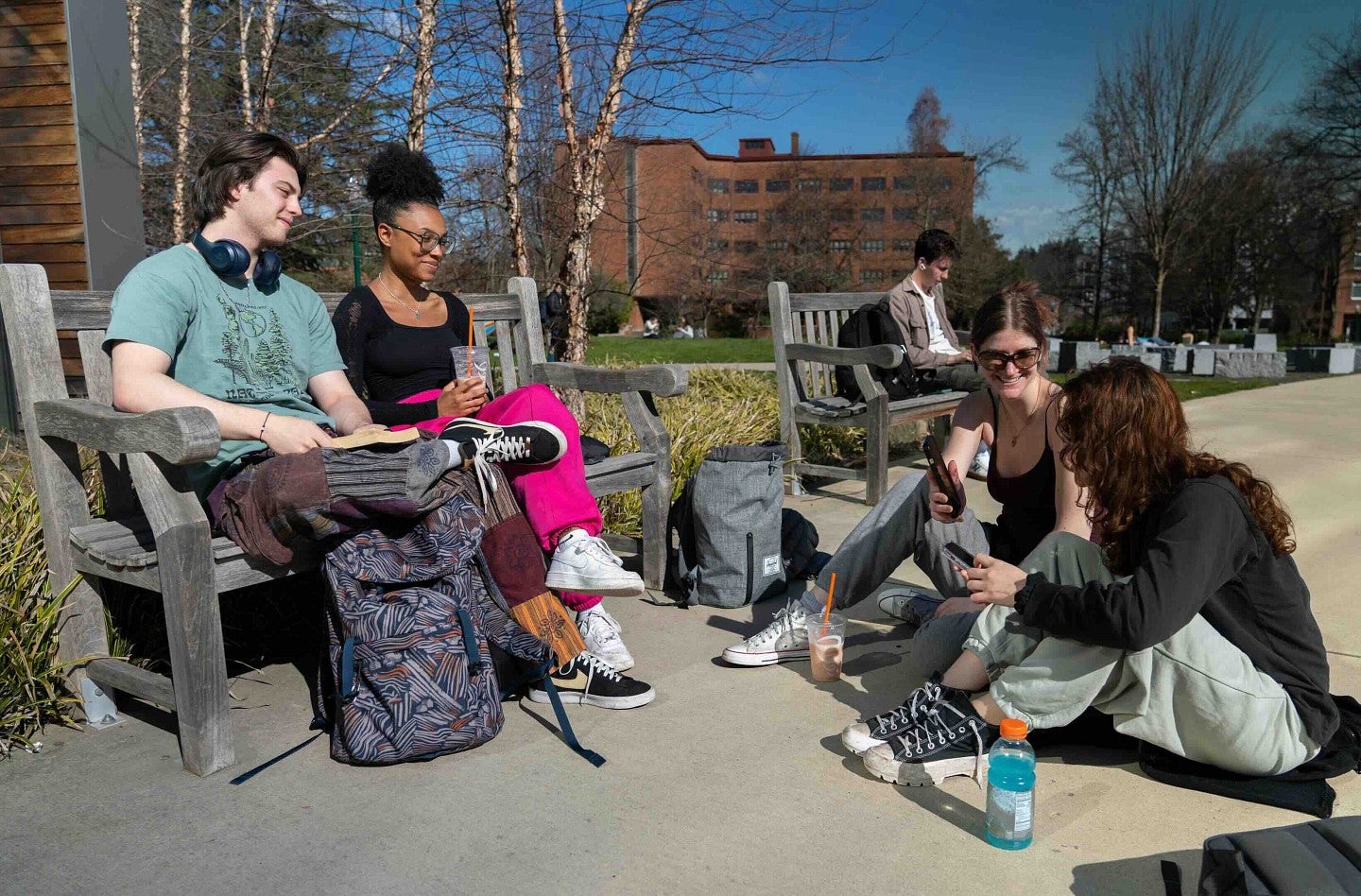
Gifts to the College of Arts and Sciences can help our students make the most of their college careers. To do this, CAS needs your support. Your contributions help us ensure that teaching, research, advising, mentoring, and support services are fully available to every student. Thank you!
World-Class Faculty in the Natural Sciences
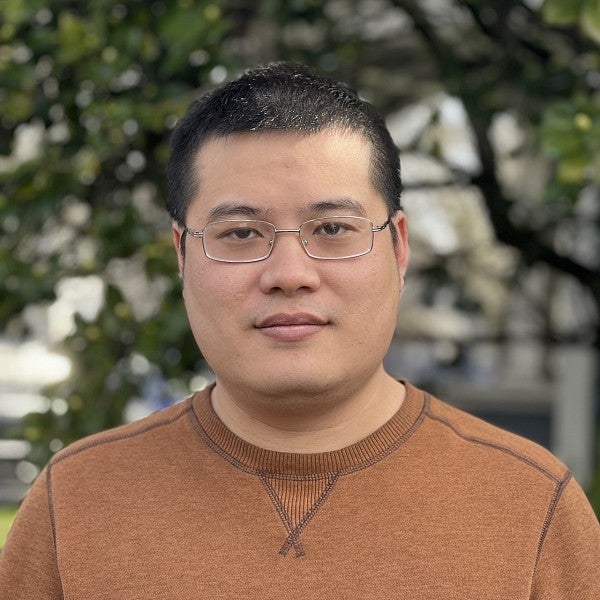
Thien Nguyen
Associate Professor of Computer Science
Thien Nguyen is an expert in natural language processing, or the ability of artificial intelligence to understand, interpret and generate meaningful human language. He aims to enable computers to perform cognitive language-related tasks. His lab is among the first to develop deep learning algorithms for information extraction and text mining in natural language processing and data mining. His research on using natural language processing for multilingual learning earned him a Faculty Early Career Development Program (CAREER) award from the National Science Foundation.
Nguyen's recent research focuses on programming computers to improve the efficiency and safety of large language models (LLMs) across human languages while extracting valuable information about events like natural disasters, cyberattacks, disease outbreaks, and protests from news articles and other sources. His work seeks to deliver useful insights from diverse data and make these technologies accessible in low-resource languages that lack adequate data sets for training AI models.
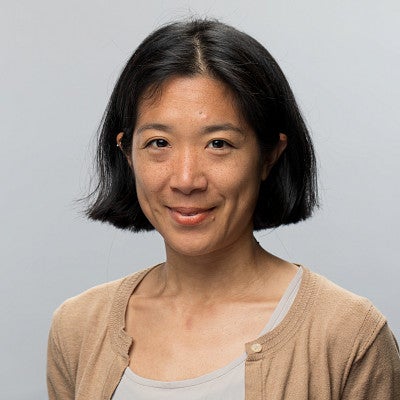
Tien-Tien Yu
Associate Professor of Physics, Institute for Fundamental Science
Tien-Tien is a theoretical particle physicist working at the interface of theory and experiment. She is particularly interested in understanding the nature of dark matter, whose existence is known through its gravitational effects on ordinary matter. She co-founded the SENSEI collaboration, an experiment utilizing silicon chips, much like those found in digital cameras, to search for dark matter. She was recently appointed to P5, an advisory group convened once a decade by the Department of Energy and National Science Foundation to help determine the next funded projects in particle physics.
On Jan. 14, 2025, Yu was one of nearly 400 scientists and engineers to receive the Presidential Early Career Award for Scientists and Engineers, the highest award the US government awards to early career scientists.
A founding member of the group Particles for Justice, Yu is also a leader in advancing diversity, equity and inclusion in the physics field. In collaboration with the Comics and Cartoon Studies program, Yu created the UO Science and Comics Initiative. Read more about the initiative here.
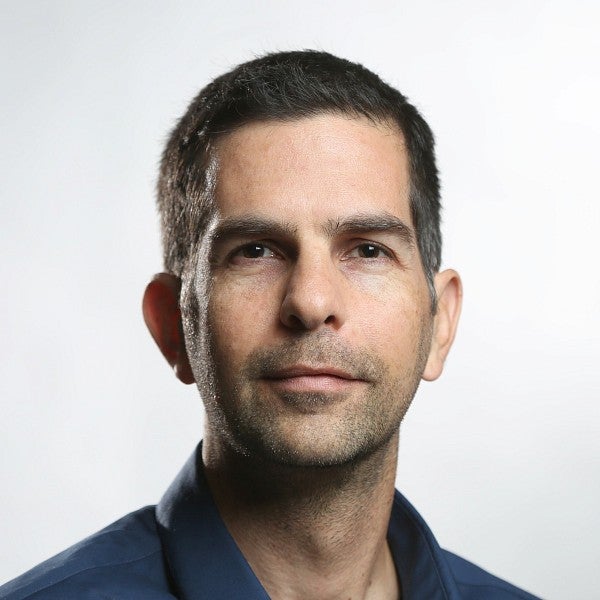
Santiago Jaramillo
Associate Professor of Biology, Institute of Neuroscience
Santiago Jaramillo leads a research group dedicated to understanding how the brain processes and interprets sounds. Using advanced techniques to monitor and manipulate neural activity in mice, along with computational approaches, he investigates how the brain filters, learns, and assigns meaning to sounds and how brain disorders can affect these processes. His interdisciplinary work, supported by the BRAIN Initiative of the National Institutes of Health and the National Science Foundation, includes collaborations with psychologists, bioengineers, theoretical neuroscientists, and linguists, with the long-term goal of developing neural interfaces to improve human-to-human and human-to-machine communication.
Beyond the lab, Jaramillo is deeply committed to broadening participation in STEM. He provides hands-on neuroscience experiences to middle school girls through the SPICE program, serves as an advisor for international programs engaging young minds in scientific critical thinking, and mentors college students from a wide range of backgrounds through programs such as NSF STEP-UP, SPUR, and the ESPRIT scholarship for aspiring K-12 science teachers.

School of Computer and Data Sciences
The mission at SCDS is to empower a diverse population of students and faculty working to advance knowledge in computer and data science, train the next generation of scholars, and engage with the wider world to tackle interdisciplinary challenges.
To do this, we start by applying our knowledge and experience at home across the University of Oregon campus.
Research in the Natural Sciences
Natural scientists use data to understand, predict, and work with naturally occurring phenomena on earth and in the universe. From highly controlled experiments in the lab to observations collected in the field, our findings help make sense of the natural world while driving advancements in society and technology that touch everyone. By expanding the limits of human knowledge, we provide a scientific foundation for helping people live better, longer lives.
2024-2025 Sponsored Research in Natural Sciences
Between July 2024 and June 2025, researchers in CAS received $83 million to fund 199 research projects, including approximately $75 million in Natural Sciences. The research projects, which span divisions and fields of study, represent CAS's commitment to curiosity, discovery, and innovation.
Explore Other Majors and Minors in the College of Arts and Sciences

Meet our Dean
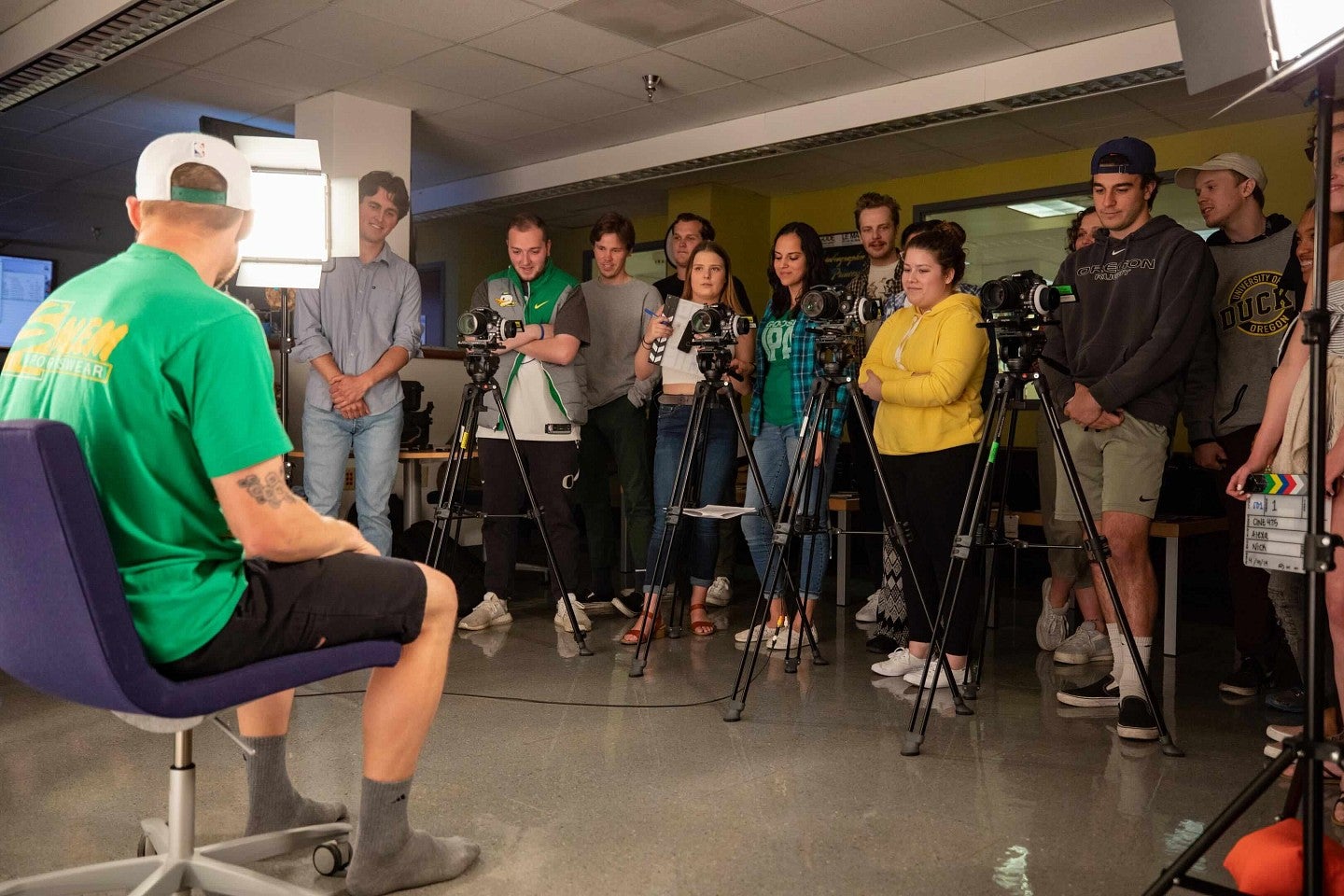
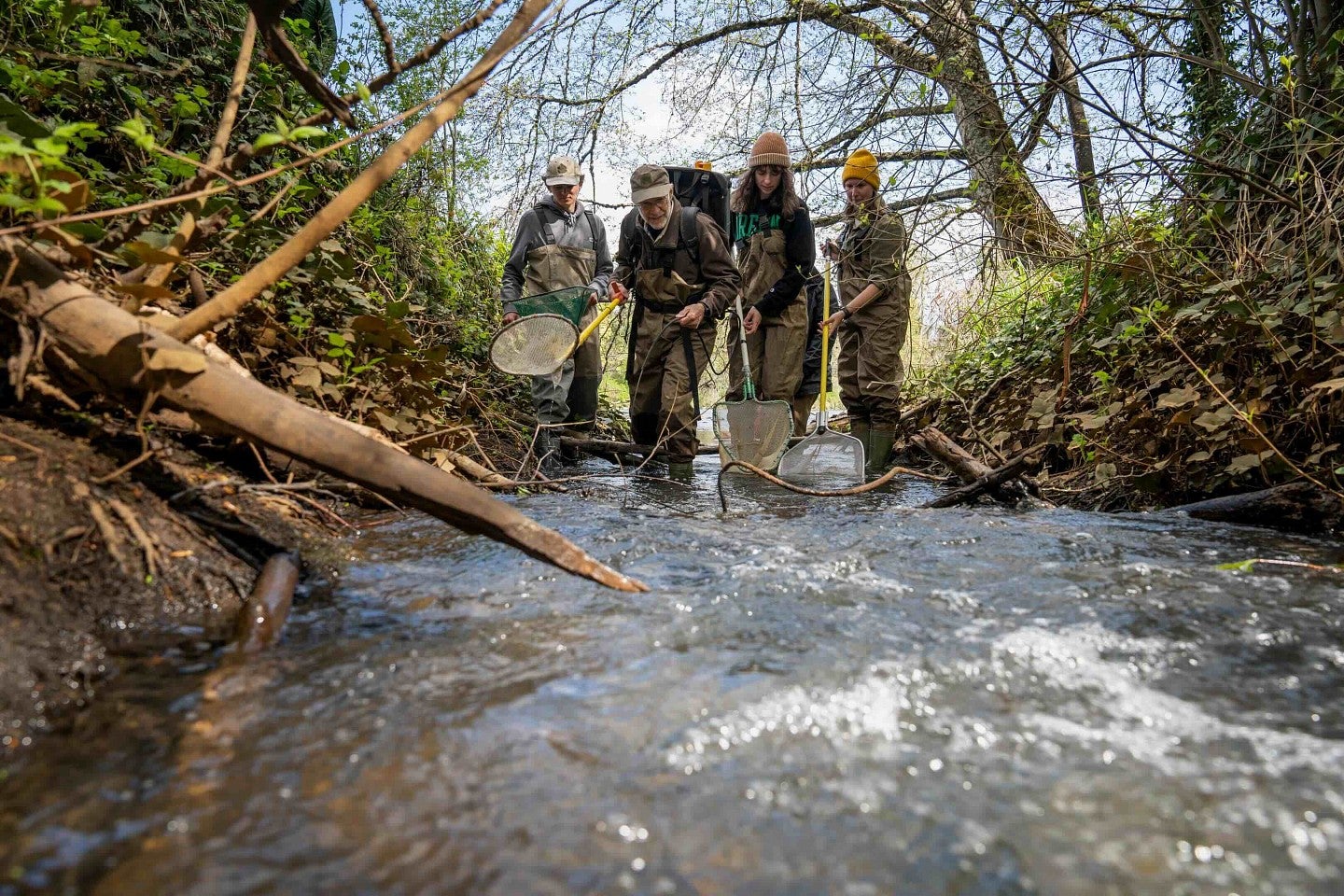
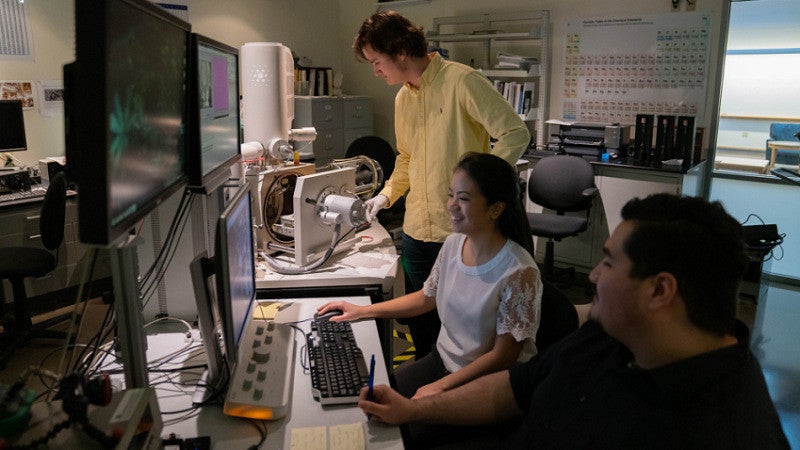
Welcome to the natural sciences, where our top-flight researchers bring students in to experience the biological, physical, and computational sciences. Working side-by-side with faculty who are equally committed to student success and scientific discovery, students learn valuable critical thinking skills through hands-on research in the lab, field, and classroom—from studying marine biology at the Oregon Institute for Marine Biology on our beautiful campus on the coast to coding advanced systems and analyzing complex data in the School of Computer and Data Science.
The research we’re conducting at the UO makes a tangible difference in our communities, our nation, and the world. For example, our chemists are pioneering the materials and techniques that will inspire the next generation of batteries for energy storage. Our psychologists are developing and testing cutting-edge interventions to improve mental health and wellbeing. Our geologists and environmental scientists are collaborating with governments, tribes, and industry partners to protect communities from earthquakes and wildfires.
You may or may not end up in a science career, but either way these experiences will change the way you experience and interact with the world. A healthy society depends on people who know how to gather evidence and critically analyze data. No matter what field you enter, scientific thinking will help you become a more thoughtful, engaged, and critical citizen in modern society.
We’re excited to explore the natural world with you.
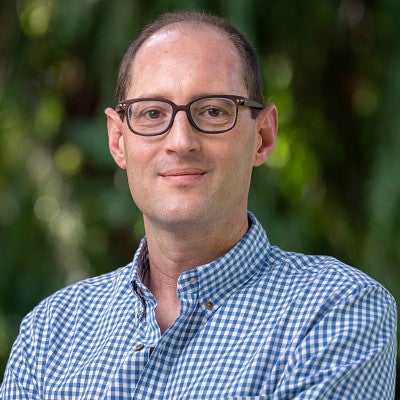
Elliot Berkman
Divisional Associate Dean, Natural Sciences
Happening at CAS
Iran Beyond the Headlines: Revolutionary Politics, Foreign Relations, and Prospects for Peace/Day 2
8:00 a.m.Oct
23
8:00 a.m.–2:00 p.m.
Day 2:
Since February the US has been at war with the Islamic Republic of Iran, yet Americans know little about that country. This interdisciplinary conference hopes to demystify Iran by examining two central questions: How has the Islamic Republic gotten to where it is now--a regime facing significant domestic challenges while simultaneously exercising substantial influence abroad? And, what might the future hold for Iran, the broader Middle East, and the US in the coming years? By more deeply looking into Iran with the goal of placing recent events within their respective historical, social, and comparative contexts, we hope to offer a better understanding of the current situation and its future prospects.
The conference is open and free to the public.
This event is part of International Education Month (IEM) programming. View the full calendar of IEM events here: https://international.uoregon.edu/IEM.
HSI Symposium: Building a Latinx-Thriving University
9:00 a.m.Oct
23
9:00 a.m.–3:00 p.m.
Join the University of Oregon for the HSI Symposium: Building a Latinx-Thriving University. This two-day gathering brings campus and community together to explore how UO can strengthen support, deepen belonging, and expand opportunities for current and prospective Latiné students.
As UO explores its pathway toward becoming a Hispanic-Serving Institution (HSI), the symposium will build on the scholarship, student leadership, cultural initiatives, and community partnerships already shaping the university. Participants will learn from research and lived experiences and develop ideas to help shape what comes next.
Thursday, October 22 | 9 a.m.–5 p.m. Day One features a keynote address by Marcela Cuellar and panels on the HSI landscape, academic success, Latiné research, and community and belonging. Thursday offers flexible, drop-in participation—attend all or part of the program when it works best for your schedule. Join us afterward for a 5 p.m. reception with acoustic music by Ricardo Cárdenas and refreshments and bites from Sheild Catering.
Friday, October 23 | 9 a.m.–2 p.m. Facilitated by Abigail Leeder, Day Two is a collaborative planning workshop focused on recruitment and enrollment, retention and graduation, research, and culture building. Participants will identify priorities and develop initial action plans, including practical steps that could begin soon and longer-term strategies.
Day Two has limited capacity, requires organizer confirmation, and asks participants to commit to the full session from 9 a.m.–2 p.m. To express interest, email cllas@uoregon.edu with a brief description of the perspectives, experiences, or ideas you hope to contribute.
We especially welcome campus and community members with lived experience as Latiné college students, as well as those who work closely with current and prospective Latiné college students, youth, and their families and can speak to their experiences, needs, and aspirations.
Free to attend. Complimentary coffee and tea will be served in the mornings, and lunch will be provided both days.
Representing Central Asia in the Academy: Methodologies of Teaching and Scholarship
noonOct
23
noon
Join the Schnitzer School of Global Studies and Languages for Representing Central Asia in the Academy: Methodologies of Teaching and Scholarship
This gathering brings together scholars to discuss current research on Central Asia and approaches to teaching the region across disciplines.
Sponsored by REEES and the Global Studies Institute.
Lunch will be provided for participants and audience members from noon to 1:00 p.m., followed by two panels and a closing discussion.
1:00–2:30 p.m. | Current Research on Central Asia Moderator: Julie Hessler
-
Christianna Bonin, University of Tennessee at Chattanooga: “The Loudest Void: Landscapes at KARLAG”
-
Sangita Gopal, University of Oregon: “Decolonial Geographies: ‘Mendirman Jaloluddin,’ Television Coproductions and Geopolitical Realignments”
-
Soonmin Kwon, University of Oregon: “Siberian Internment After World War II in Central Asia and its Legacies”
-
Katya Hokanson, University of Oregon: “Russian Representations of Central Asia in 1900 Paris”
3:00–4:30 p.m. | Pedagogy in Relation to Central Asia Moderator: Katya Hokanson
-
Naomi Caffee, Reed College: “Central Asia Everywhere”
-
Julie Hessler, University of Oregon: “Integrating Central Asia into Soviet History”
-
Lara Ravitch, University of Oregon: “Integrating Central Asian Cultures into Russian Language Pedagogy”
-
Christianna Bonin, University of Tennessee at Chattanooga: “Central Asia: New Methods for Pedagogy”
4:30–5:00 p.m. | Wrap-up and General Discussion
Public Lands Justice
2:00 p.m.Oct
26
2:00–3:20 p.m.
Public Lands Justice: A Conversation with Midy Aponte-Vargas and Shandra Terry.
Aponte-Vargas is the founding Executive Director of the American Latino Heritage Fund at the National Park Foundation. Terry is the former USDA Forest Service National Communications and Engagement Lead for the National Equity and Engagement Office.
Co-sponsors: Just Futures Institute, Tierra Viva, Center for Environmental Futures, Oregon Humanities Center, the Barbara and Carlisle Moore Professor in English, Environmental Studies, English, Climate Justice league, Environmental Storytelling Lab, and FUSEE.