
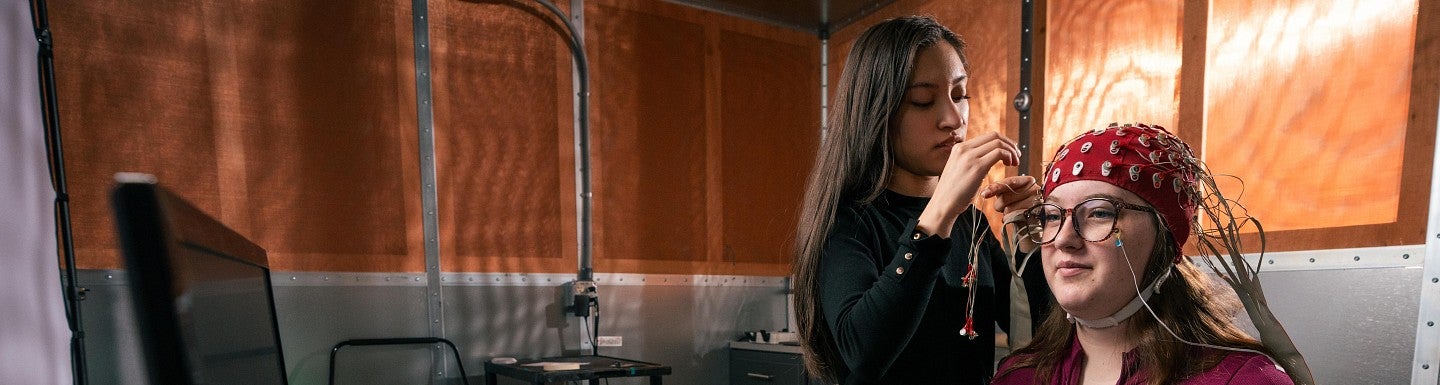
Our science departments are committed to creating and disseminating new knowledge in their fields by combining research and teaching. Our 300 faculty members—including fellows of many learned societies and academies—are engaged in research that spans a broad range, from questions about the foundations of quantum mechanics, to the development of cancer cells and the workings of the brain, to work resulting in the spin-off of high-technology companies. Faculty share their excitement about their research with their students, training them to become part of the next generation of scientists who will push the frontiers of human knowledge. Explore majors, minors, concentrations, and academic programs in the Natural Sciences.
News from Natural Sciences
All news »
We Love Our Supporters
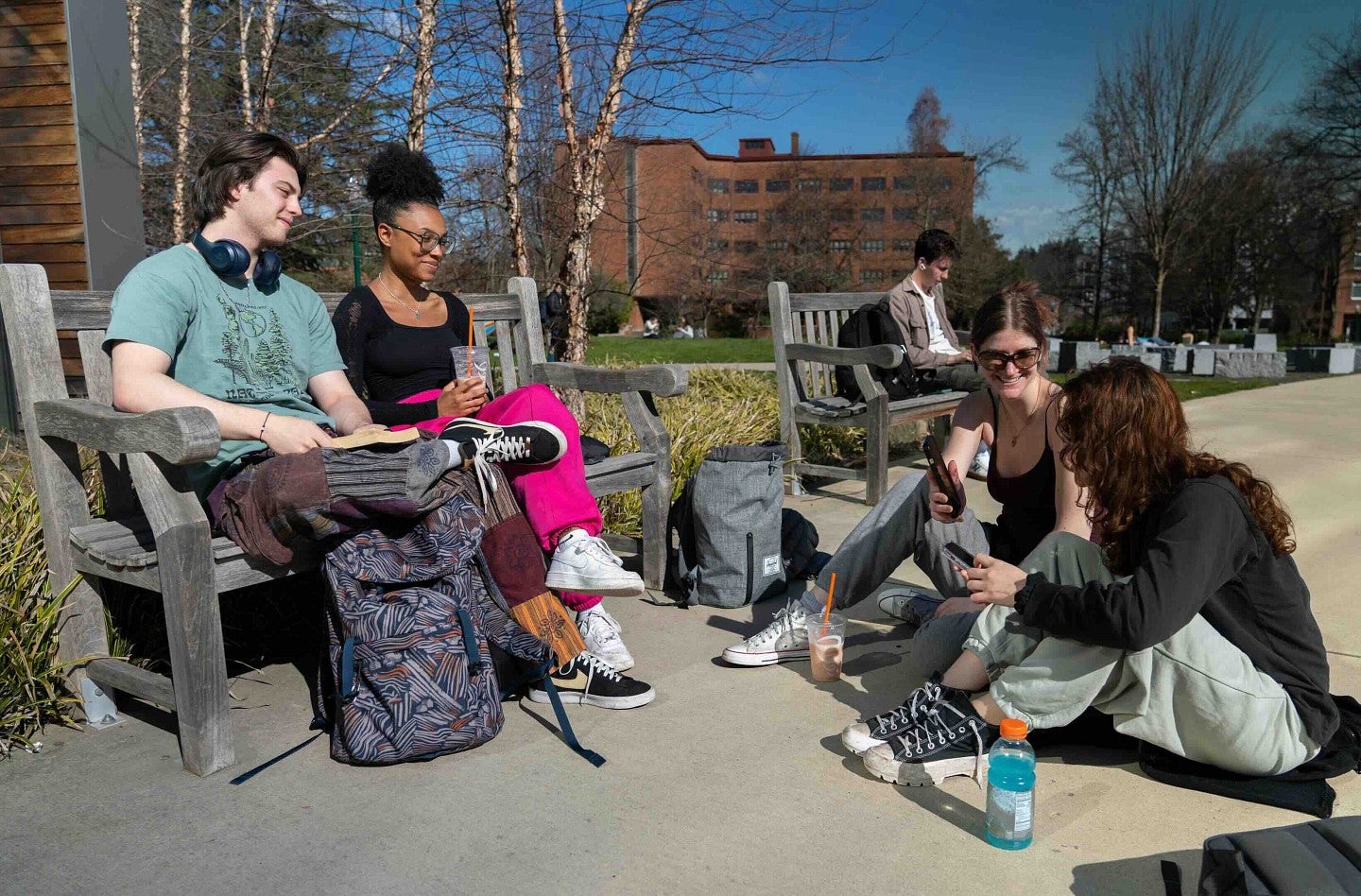
Gifts to the College of Arts and Sciences can help our students make the most of their college careers. To do this, CAS needs your support. Your contributions help us ensure that teaching, research, advising, mentoring, and support services are fully available to every student. Thank you!
World-Class Faculty in the Natural Sciences
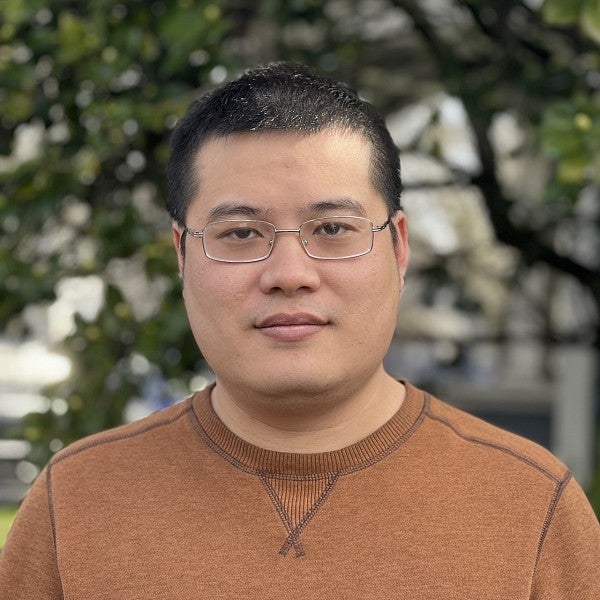
Thien Nguyen
Associate Professor of Computer Science
Thien Nguyen is an expert in natural language processing, or the ability of artificial intelligence to understand, interpret and generate meaningful human language. He aims to enable computers to perform cognitive language-related tasks. His lab is among the first to develop deep learning algorithms for information extraction and text mining in natural language processing and data mining. His research on using natural language processing for multilingual learning earned him a Faculty Early Career Development Program (CAREER) award from the National Science Foundation.
Nguyen's recent research focuses on programming computers to improve the efficiency and safety of large language models (LLMs) across human languages while extracting valuable information about events like natural disasters, cyberattacks, disease outbreaks, and protests from news articles and other sources. His work seeks to deliver useful insights from diverse data and make these technologies accessible in low-resource languages that lack adequate data sets for training AI models.
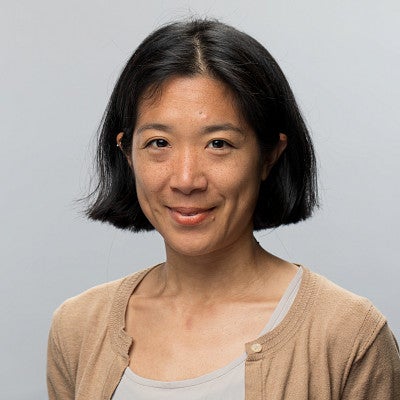
Tien-Tien Yu
Associate Professor of Physics, Institute for Fundamental Science
Tien-Tien is a theoretical particle physicist working at the interface of theory and experiment. She is particularly interested in understanding the nature of dark matter, whose existence is known through its gravitational effects on ordinary matter. She co-founded the SENSEI collaboration, an experiment utilizing silicon chips, much like those found in digital cameras, to search for dark matter. She was recently appointed to P5, an advisory group convened once a decade by the Department of Energy and National Science Foundation to help determine the next funded projects in particle physics.
On Jan. 14, 2025, Yu was one of nearly 400 scientists and engineers to receive the Presidential Early Career Award for Scientists and Engineers, the highest award the US government awards to early career scientists.
A founding member of the group Particles for Justice, Yu is also a leader in advancing diversity, equity and inclusion in the physics field. In collaboration with the Comics and Cartoon Studies program, Yu created the UO Science and Comics Initiative. Read more about the initiative here.
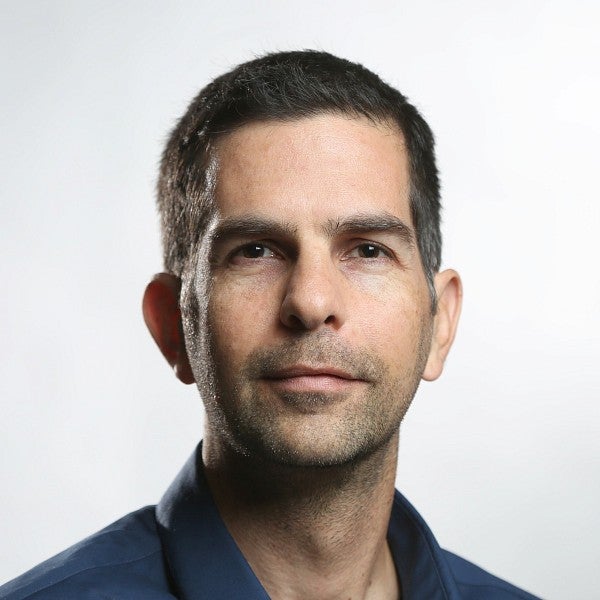
Santiago Jaramillo
Associate Professor of Biology, Institute of Neuroscience
Santiago Jaramillo leads a research group dedicated to understanding how the brain processes and interprets sounds. Using advanced techniques to monitor and manipulate neural activity in mice, along with computational approaches, he investigates how the brain filters, learns, and assigns meaning to sounds and how brain disorders can affect these processes. His interdisciplinary work, supported by the BRAIN Initiative of the National Institutes of Health and the National Science Foundation, includes collaborations with psychologists, bioengineers, theoretical neuroscientists, and linguists, with the long-term goal of developing neural interfaces to improve human-to-human and human-to-machine communication.
Beyond the lab, Jaramillo is deeply committed to broadening participation in STEM. He provides hands-on neuroscience experiences to middle school girls through the SPICE program, serves as an advisor for international programs engaging young minds in scientific critical thinking, and mentors college students from a wide range of backgrounds through programs such as NSF STEP-UP, SPUR, and the ESPRIT scholarship for aspiring K-12 science teachers.

School of Computer and Data Sciences
The mission at SCDS is to empower a diverse population of students and faculty working to advance knowledge in computer and data science, train the next generation of scholars, and engage with the wider world to tackle interdisciplinary challenges.
To do this, we start by applying our knowledge and experience at home across the University of Oregon campus.
Research in the Natural Sciences
Natural scientists use data to understand, predict, and work with naturally occurring phenomena on earth and in the universe. From highly controlled experiments in the lab to observations collected in the field, our findings help make sense of the natural world while driving advancements in society and technology that touch everyone. By expanding the limits of human knowledge, we provide a scientific foundation for helping people live better, longer lives.
2024-2025 Sponsored Research in Natural Sciences
Between July 2024 and June 2025, researchers in CAS received $83 million to fund 199 research projects, including approximately $75 million in Natural Sciences. The research projects, which span divisions and fields of study, represent CAS's commitment to curiosity, discovery, and innovation.
Explore Other Majors and Minors in the College of Arts and Sciences

Meet our Dean
Welcome to the natural sciences, where our top-flight researchers bring students in to experience the biological, physical, and computational sciences. Working side-by-side with faculty who are equally committed to student success and scientific discovery, students learn valuable critical thinking skills through hands-on research in the lab, field, and classroom—from studying marine biology at the Oregon Institute for Marine Biology on our beautiful campus on the coast to coding advanced systems and analyzing complex data in the School of Computer and Data Science.
The research we’re conducting at the UO makes a tangible difference in our communities, our nation, and the world. For example, our chemists are pioneering the materials and techniques that will inspire the next generation of batteries for energy storage. Our psychologists are developing and testing cutting-edge interventions to improve mental health and wellbeing. Our geologists and environmental scientists are collaborating with governments, tribes, and industry partners to protect communities from earthquakes and wildfires.
You may or may not end up in a science career, but either way these experiences will change the way you experience and interact with the world. A healthy society depends on people who know how to gather evidence and critically analyze data. No matter what field you enter, scientific thinking will help you become a more thoughtful, engaged, and critical citizen in modern society.
We’re excited to explore the natural world with you.
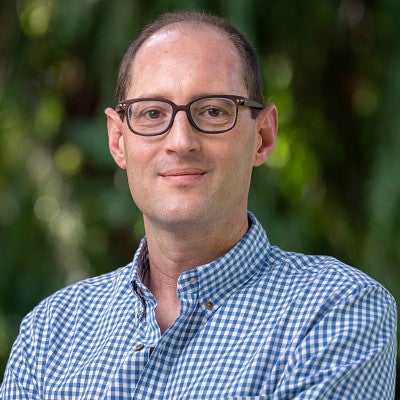
Elliot Berkman
Divisional Associate Dean, Natural Sciences
Happening at CAS
Public Lands Justice
2:00 p.m.Oct
26
2:00–3:20 p.m.
Public Lands Justice: A Conversation with Midy Aponte-Vargas and Shandra Terry.
Aponte-Vargas is the founding Executive Director of the American Latino Heritage Fund at the National Park Foundation. Terry is the former USDA Forest Service National Communications and Engagement Lead for the National Equity and Engagement Office.
Co-sponsors: Just Futures Institute, Tierra Viva, Center for Environmental Futures, Oregon Humanities Center, the Barbara and Carlisle Moore Professor in English, Environmental Studies, English, Climate Justice league, Environmental Storytelling Lab, and FUSEE.
Cinema Studies Fall Term Coffee Hours
9:30 a.m.Join the Department of Cinema Studies for a cup of coffee or hot apple cider every week on Tuesdays during fall term!
Oct
27
9:30–11:30 a.m.
Join the Department of Cinema Studies for a cup of coffee or hot apple cider every week on Tuesdays during fall term!
Eco-Fascism Lecture Series: "Blood and Soil: Race, Gender and Food in Nazi Ideology"
4:00 p.m.Oct
27
4:00 p.m.
Environmental concerns—from nature conservation to air and water quality—are often associated with progressive politics. But under Fascisms past and present, ecological ideas have also animated authoritarian projects. This speaker series examines how dictatorships mobilize nature as both metaphor and material resource. As a metaphor, agrarianism evokes Fascism’s foundational mythos: the dictator will restore the country’s glorious national past. To live a rural, old-fashioned lifestyle was to be a more patriotic citizen. “Italy must be ruralized!” proclaimed Benito Mussolini in 1927. As a material resource, nature is often put to use in service of eugenics and racial hygiene.
Our speakers will examine the professional biographies of the scientists, industrialists, and entrepreneurs hired by Fascist regimes to determine the limits of biological possibility. Case studies from empire and the colonies will investigate the Fascist programs for experimental plant nurseries, animal breeding, and chemical trials. Rather than treating eco-fascism as a contradiction in terms, our speakers will situate it within longer histories of environmental planning, population management, and technocratic governance. They will explain how dictatorships use the tools of authoritarian governance to modify the environment in their pursuit of more Fascist futures.
Please join us for these illuminating discussions.
Talk details:
Blood and Soil: Race, Gender and Food in Nazi Ideology
Speaker: Prof. Alice Weinreb, Loyola University
This talk will explore the ways in which Hitler’s ‘blood and soil’ ideology raced and gendered the natural environment. According to Nazi ideology, ‘natural’ food was necessary for the maintenance of a pure and healthy Volk. Food thus was a way of constructing (and potentially of threatening) gender and racial identities. Weinreb’s talk will explore the ways in which nature was transformed into something to be consumed, which in turn naturalized Aryan supremacy and radical gender hierarchies. In Nazi Germany, racial and gender identity was performed through daily acts of food production (farming and cooking) and food consumption (shopping and eating). The talk also discusses the ramifications of linking the protection of the environment with the protection of racism and misogyny, discussing connections to contemporary far-right discourses linking environmental contamination, impure food, and racial and gender hierarchies.
For more information, please contact Prof. Diana Garvin, dgarvin@uoregon.edu.
Supported by: Department of Romance Languages, Italian Sector.
History Department Fall Term Coffee Hour
10:30 a.m.Oct
29
10:30–11:30 a.m.
Please join us Thursday mornings for a free cup of coffee, pastries, and conversation with your history department community! We’re excited to continue this tradition for our history undergraduate and graduate students, faculty, and staff. We hope to see you there!