
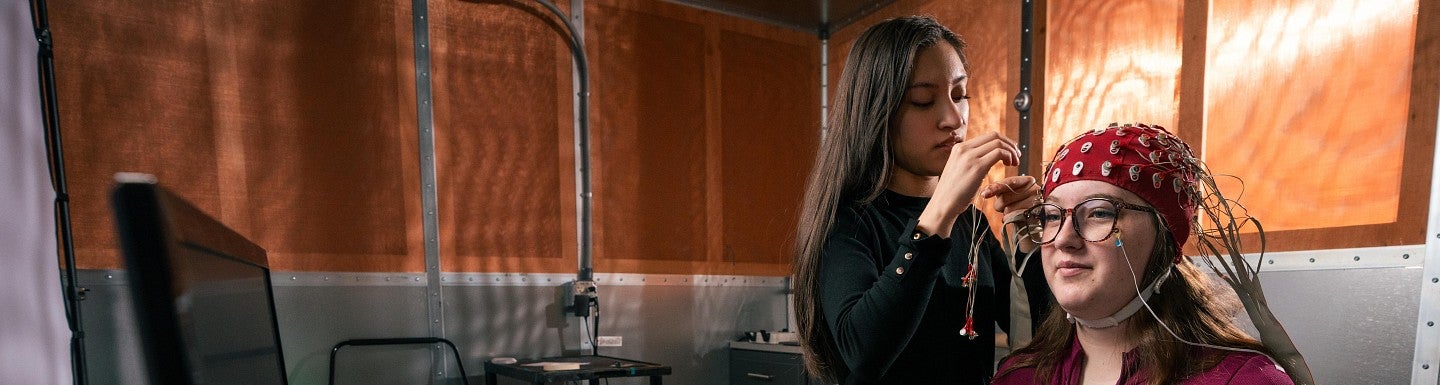
Our science departments are committed to creating and disseminating new knowledge in their fields by combining research and teaching. Our 300 faculty members—including fellows of many learned societies and academies—are engaged in research that spans a broad range, from questions about the foundations of quantum mechanics, to the development of cancer cells and the workings of the brain, to work resulting in the spin-off of high-technology companies. Faculty share their excitement about their research with their students, training them to become part of the next generation of scientists who will push the frontiers of human knowledge. Explore majors, minors, concentrations, and academic programs in the Natural Sciences.
News from Natural Sciences
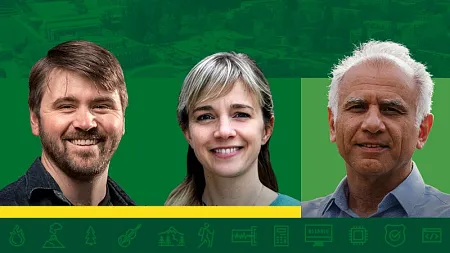

All news »
We Love Our Supporters
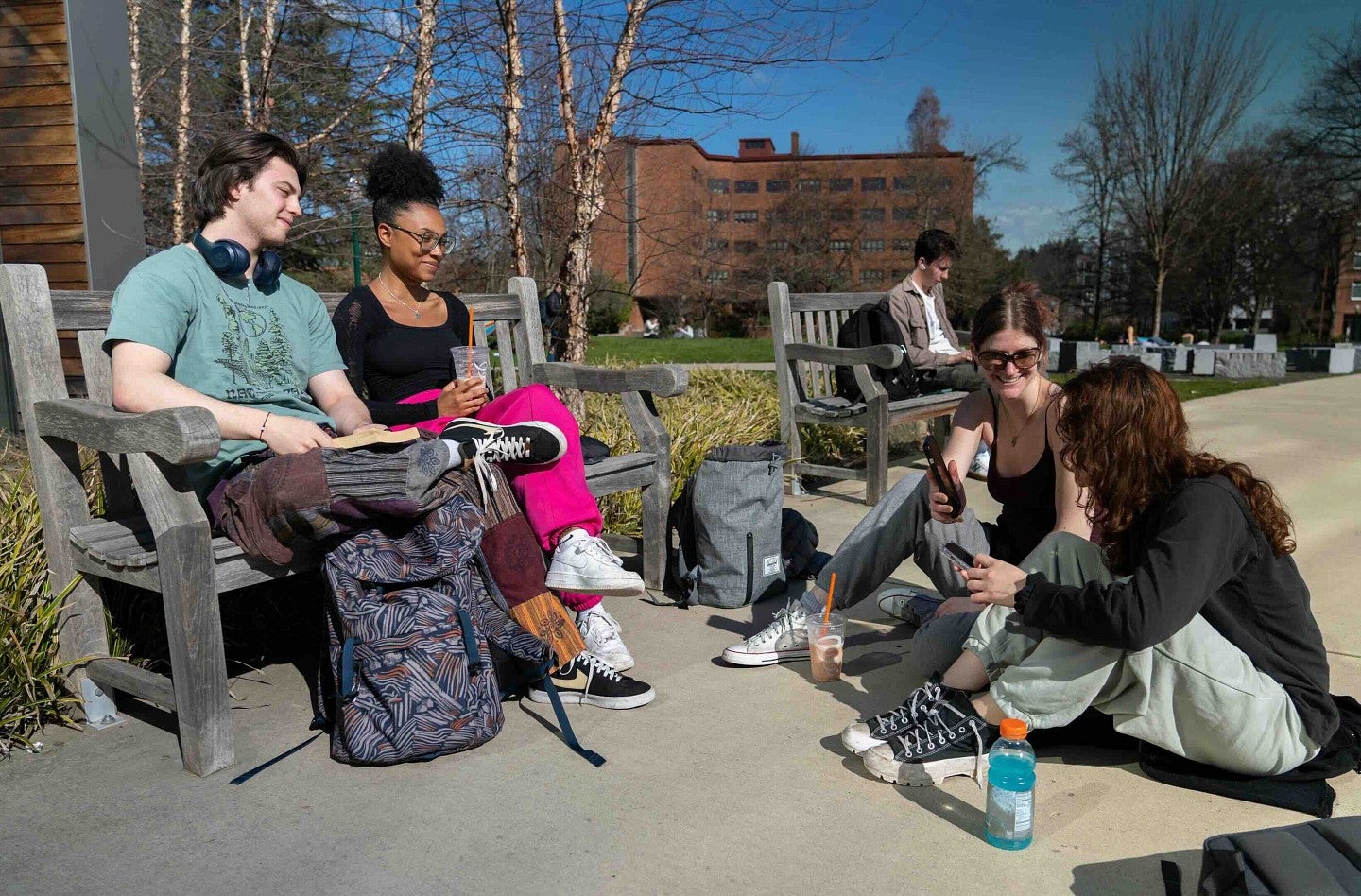
Gifts to the College of Arts and Sciences can help our students make the most of their college careers. To do this, CAS needs your support. Your contributions help us ensure that teaching, research, advising, mentoring, and support services are fully available to every student. Thank you!
World-Class Faculty in the Natural Sciences
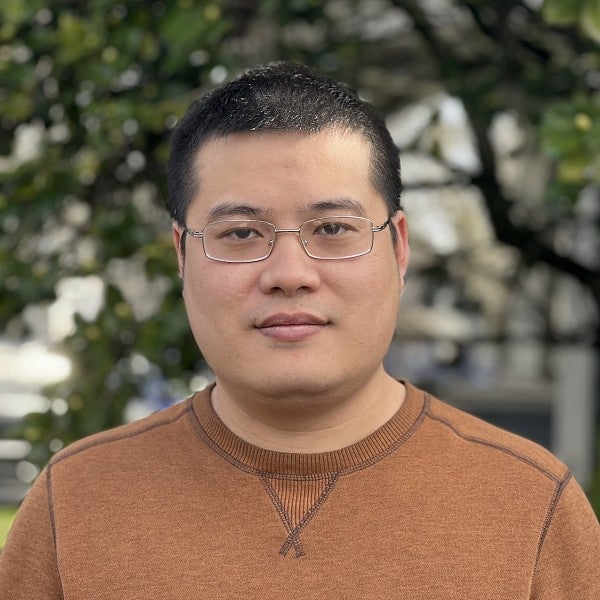
Thien Nguyen
Associate Professor of Computer Science
Thien Nguyen is an expert in natural language processing, or the ability of artificial intelligence to understand, interpret and generate meaningful human language. He aims to enable computers to perform cognitive language-related tasks. His lab is among the first to develop deep learning algorithms for information extraction and text mining in natural language processing and data mining. His research on using natural language processing for multilingual learning earned him a Faculty Early Career Development Program (CAREER) award from the National Science Foundation.
Nguyen's recent research focuses on programming computers to improve the efficiency and safety of large language models (LLMs) across human languages while extracting valuable information about events like natural disasters, cyberattacks, disease outbreaks, and protests from news articles and other sources. His work seeks to deliver useful insights from diverse data and make these technologies accessible in low-resource languages that lack adequate data sets for training AI models.
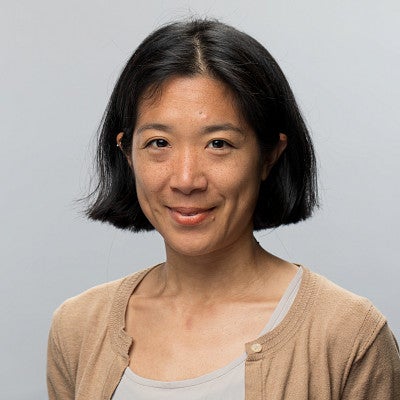
Tien-Tien Yu
Associate Professor of Physics, Institute for Fundamental Science
Tien-Tien is a theoretical particle physicist working at the interface of theory and experiment. She is particularly interested in understanding the nature of dark matter, whose existence is known through its gravitational effects on ordinary matter. She co-founded the SENSEI collaboration, an experiment utilizing silicon chips, much like those found in digital cameras, to search for dark matter. She was recently appointed to P5, an advisory group convened once a decade by the Department of Energy and National Science Foundation to help determine the next funded projects in particle physics.
On Jan. 14, 2025, Yu was one of nearly 400 scientists and engineers to receive the Presidential Early Career Award for Scientists and Engineers, the highest award the US government awards to early career scientists.
A founding member of the group Particles for Justice, Yu is also a leader in advancing diversity, equity and inclusion in the physics field. In collaboration with the Comics and Cartoon Studies program, Yu created the UO Science and Comics Initiative. Read more about the initiative here.
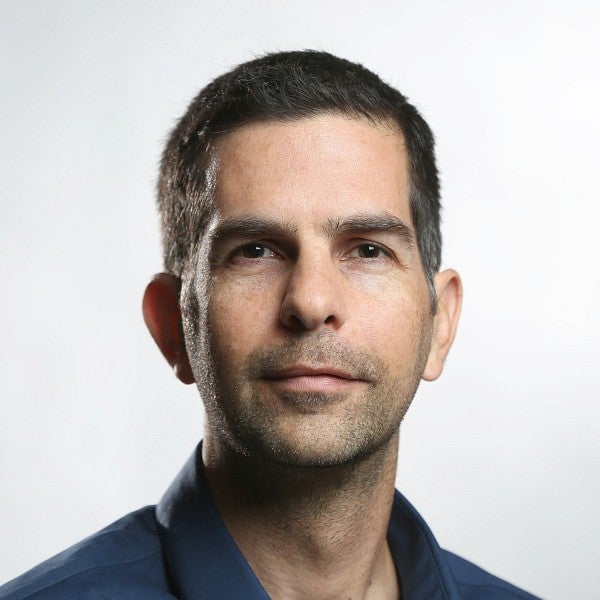
Santiago Jaramillo
Associate Professor of Biology, Institute of Neuroscience
Santiago Jaramillo leads a research group dedicated to understanding how the brain processes and interprets sounds. Using advanced techniques to monitor and manipulate neural activity in mice, along with computational approaches, he investigates how the brain filters, learns, and assigns meaning to sounds and how brain disorders can affect these processes. His interdisciplinary work, supported by the BRAIN Initiative of the National Institutes of Health and the National Science Foundation, includes collaborations with psychologists, bioengineers, theoretical neuroscientists, and linguists, with the long-term goal of developing neural interfaces to improve human-to-human and human-to-machine communication.
Beyond the lab, Jaramillo is deeply committed to broadening participation in STEM. He provides hands-on neuroscience experiences to middle school girls through the SPICE program, serves as an advisor for international programs engaging young minds in scientific critical thinking, and mentors college students from a wide range of backgrounds through programs such as NSF STEP-UP, SPUR, and the ESPRIT scholarship for aspiring K-12 science teachers.

School of Computer and Data Sciences
The mission at SCDS is to empower a diverse population of students and faculty working to advance knowledge in computer and data science, train the next generation of scholars, and engage with the wider world to tackle interdisciplinary challenges.
To do this, we start by applying our knowledge and experience at home across the University of Oregon campus.
Research in the Natural Sciences
Natural scientists use data to understand, predict, and work with naturally occurring phenomena on earth and in the universe. From highly controlled experiments in the lab to observations collected in the field, our findings help make sense of the natural world while driving advancements in society and technology that touch everyone. By expanding the limits of human knowledge, we provide a scientific foundation for helping people live better, longer lives.
2024-2025 Sponsored Research in Natural Sciences
Between July 2024 and June 2025, researchers in CAS received $83 million to fund 199 research projects, including approximately $75 million in Natural Sciences. The research projects, which span divisions and fields of study, represent CAS's commitment to curiosity, discovery, and innovation.
Explore Other Majors and Minors in the College of Arts and Sciences

Meet our Dean
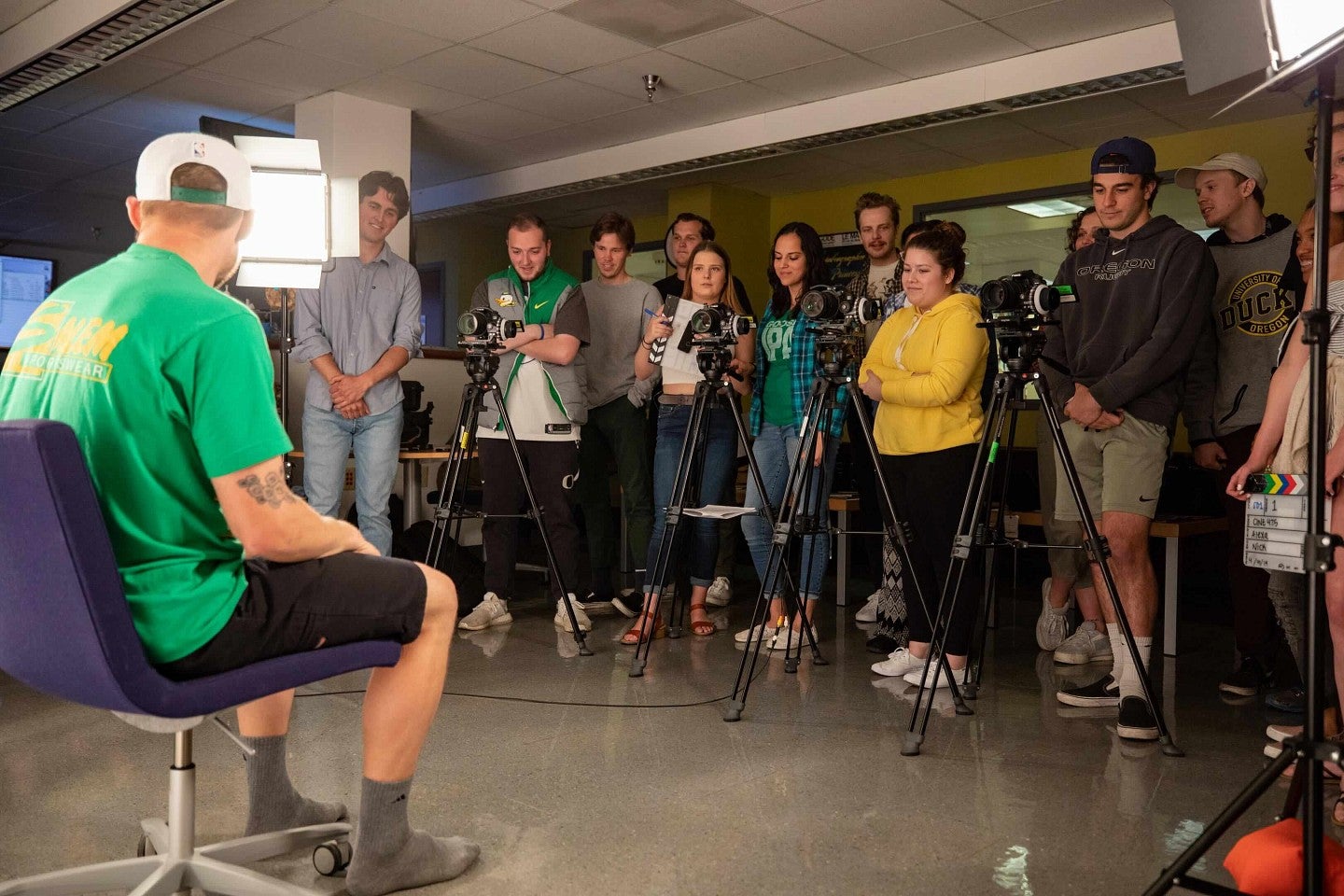
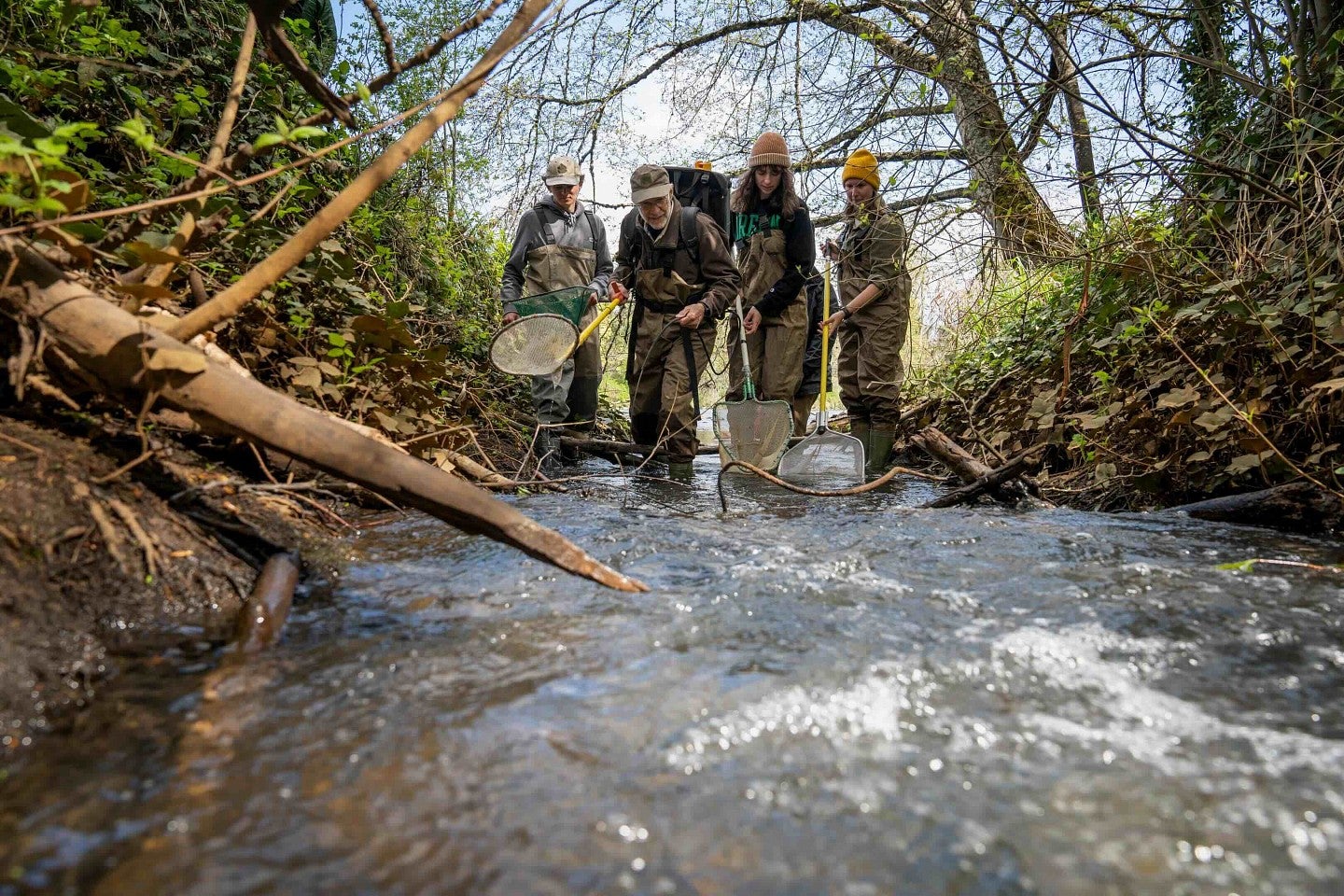
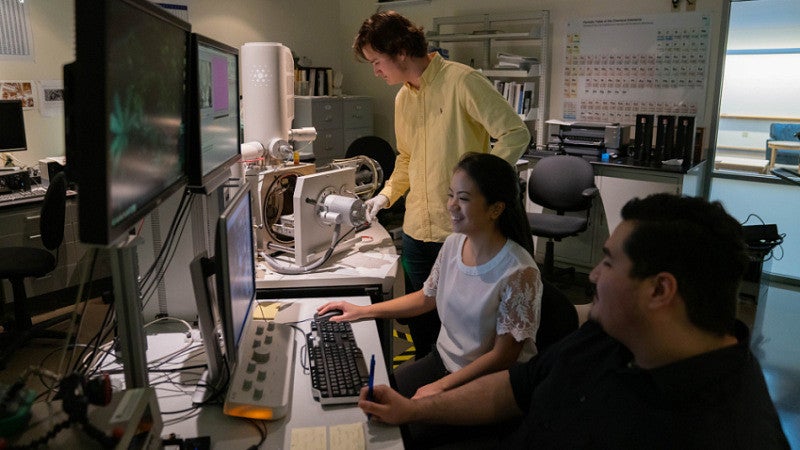
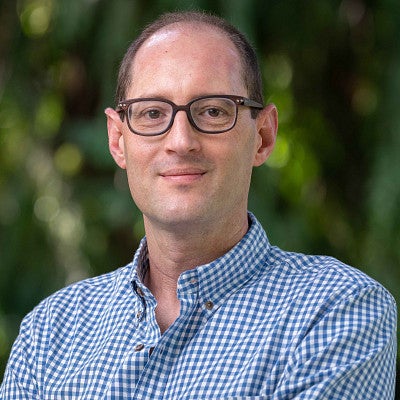
Welcome to the natural sciences, where our top-flight researchers bring students in to experience the biological, physical, and computational sciences. Working side-by-side with faculty who are equally committed to student success and scientific discovery, students learn valuable critical thinking skills through hands-on research in the lab, field, and classroom—from studying marine biology at the Oregon Institute for Marine Biology on our beautiful campus on the coast to coding advanced systems and analyzing complex data in the School of Computer and Data Science.
The research we’re conducting at the UO makes a tangible difference in our communities, our nation, and the world. For example, our chemists are pioneering the materials and techniques that will inspire the next generation of batteries for energy storage. Our psychologists are developing and testing cutting-edge interventions to improve mental health and wellbeing. Our geologists and environmental scientists are collaborating with governments, tribes, and industry partners to protect communities from earthquakes and wildfires.
You may or may not end up in a science career, but either way these experiences will change the way you experience and interact with the world. A healthy society depends on people who know how to gather evidence and critically analyze data. No matter what field you enter, scientific thinking will help you become a more thoughtful, engaged, and critical citizen in modern society.
We’re excited to explore the natural world with you.
Elliot Berkman
Divisional Associate Dean, Natural Sciences
Happening at CAS
Job Shadow Day Info Session
4:00 p.m.Oct
19
4:00–5:00 p.m.
Interested in exploring career possibilities? Join us to learn about Job Shadow Day. This unique opportunity connects students with local professionals for a day of workplace observation, career exploration, and networking.
At this info session, you'll learn:
- What Job Shadow Day is and how it works
- How to apply and get matched with a site host
- What to expect during your shadow experience
- Tips for making the most of your day
Whether you're exploring career options, curious about a particular industry, or looking to gain firsthand insight into the world of work, this session will help you take the next step with confidence.
Hosted by: CAS CareerLab Open to: All CAS undergraduates
✨ Spots are limited. Come find out how to apply and get matched!
Cinema Studies Fall Term Coffee Hours
9:30 a.m.Join the Department of Cinema Studies for a cup of coffee or hot apple cider every week on Tuesdays during fall term!
Oct
20
9:30–11:30 a.m.
Join the Department of Cinema Studies for a cup of coffee or hot apple cider every week on Tuesdays during fall term!
Your Future in Sustainability (Career Panel + Networking)
4:00 p.m.Oct
20
4:00–6:30 p.m.
Curious about careers in sustainability, the environment, or climate solutions? Join us for Your Future in Sustainability, a FREE career exploration and networking event designed to help you connect with professionals working across the environmental and sustainability field.
Whether you’re interested in conservation, climate solutions, environmental science, policy, consulting, GIS, communications, or other sustainability-related career paths, this event is a chance to learn what careers in the field actually look like and how you can get there.
Come for either or both events! All are welcome!
Industry Insights Panel | 4:00–5:00 p.m.
Hear from professionals and alumni about their career journeys, industry trends, the skills employers are looking for, and how they got started in the field.
Small-Group Networking | 5:00–6:30 p.m.
Connect directly with professionals in a casual setting. Rotate between conversations, ask questions, learn about different career paths, and get advice about internships, jobs, fellowships, and other opportunities. FREE FOOD!
Employers include:
- Lane County Government
- BRING Recycling
- Peace Corps
- City of Eugene
- University of Oregon
- Nearby Nature
- Walama Restoration
- Ameri Corps
- Cascades Raptor Center
- and more to come!
You don’t need to have a specific career path figured out to attend. Whether you’re exploring sustainability for the first time, looking for an internship or job, or already planning a career in the environmental field, you’ll have the opportunity to make connections and learn from people working in the industry.
Come with questions, curiosity, and your future in mind.
Panelists:
Jack Bentivoglio: Jack is a Materials Recovery Assistant at BRING, a Eugene-based nonprofit dedicated to waste prevention, reuse, and sustainable materials management. Jack works with contractors and subcontractors to recover reusable building materials and connect them with opportunities for a second life rather than disposal. During the events season, he coordinates Sustainable Event Services for Lane County Public Works, managing a reusable dishware program and impact reporting for public events. As a University of Oregon Environmental Studies and Sustainable Business graduate with hands-on experience in material recovery and zero waste event operations, Jack is building a career at the intersection of sustainability, materials management, and entertainment.
Maddy Broedel: Maddy grew up in Washington and New York, hiking the Olympic and Adirondack mountains, searching the coastline for tidepools, and exploring old growth forests. After a stint living in a Midwest community with few environmental education opportunities, she discovered a passion for connecting youth and families with nature and advocating for habitat preservation and restoration. She received her Bachelor’s degree at the University of Oregon, where she studied Public Relations and Nonprofit Administration with an emphasis in environmental conservation.
Maddy joined Cascades Raptor Center’s team in 2023, where she enjoys meeting visitors, engaging the public, and creating meaningful community connections. In addition to her work with the birds, she has served on the Advancement Committee for the Oregon Coast Aquarium and as the Board Vice President for the Emerald Valley Development Professionals. When she’s not at the Center you can find her shopping at farmer’s markets, hanging out at coffee shops, hiking the Oregon coast, and spending time with her fiancé and cat.
Danielle Klinkebiel: Danielle is a climate policy professional in Lane County with more than a decade of experience advancing sustainability, environmental stewardship, and community-focused initiatives. She currently serves as a Climate Policy Analyst with the City of Eugene, where she works on climate policy and programs designed to reduce greenhouse gas emissions and build a more sustainable community
Moderator:
Dr. Taylor McHolm is the Director of the Student Sustainability Center at the University of Oregon. In this role, Taylor develops student leaders, helps facilitate student sustainability projects, and develops programming to meet student needs on campus. He received his PhD from the University of Oregon’s interdisciplinary Environmental Science, Studies, and Policy program, with a focal department of English. His published research addresses representations of environmental justice and the racial components of the Anthropocene. In all areas, his work and research prioritize the intersections of sustainability, environmental justice, social equity, and cultural production
Anthropology Department Presents: “Geophysical Surveys of Southern Pacific Northwest Coast Plankhouses"
noonOct
21
noon
Please join the Department of Anthropology and Gabriel M. Sanchez for the Colloquium Series talk: "Geophysical Surveys of Southern Pacific Northwest Coast Plankhouses."
Geophysical and remote sensing surveys of Pacific Northwest Coast plankhouses, sweathouses, and other architectural features have been a growing component of Pacific Northwest Coast archaeological studies. Most of these studies have focused on coastal plankhouses with associated shell middens, especially in British Columbia. Limited geophysical examples exist of Pacific Northwest Coast architectural features from the southern region, including Northern California and Oregon, especially in riverine settings.
In this study, we integrate ground penetrating radar and magnetic gradiometry to document subsurface features in collaboration with the Tsnungwe Council. Our findings, based on our interpretations of the observed data, document subsurface features ranging from ~2 m wide pits to large rectangular plankhouses ~6 m wide and 12 m in length. These houses contain central subterranean pits, which contain a hearth, that are ~5 m wide. Our findings support the interpretation of a large multicomponent village site with several plankhouses present, providing a unique example of southern Pacific Northwest Coast Indigenous architecture.
Sanchez is an Indigenous Anthropologist and Assistant Professor in the Department of Anthropology and affiliated faculty in Latinx and Native American and Indigenous Studies. Gabriel completed his graduate studies at the University of California, Berkeley, in 2019. From 2019-2021, he was part of the inaugural cohort College of Social Science Dean’s Research Associate (postdoc) Program at Michigan State University, which aims to promote inclusive excellence in the academy. From 2021-2022, he served as an Assistant Professor in the Department of Anthropology at Michigan State, before joining the UO. Currently, he is the director of the Coastal Archaeology, Ancient Proteomics, and Zooarchaeology laboratories. He also directs the Collaborative Archaeology Field School. Sanchez currently participates in a collaborative and community-based participatory research projects in California and Oregon with the Amah Mutsun Tribal Band, the Tsnungwe Council, and the Confederated Tribes of Grand Ronde.