
Tykeson Teaching Awards
Faculty Research Mentor Award
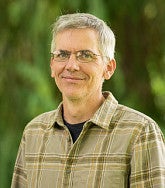
Micah Warren won an award from the Provost’s Office for his book on the mathematics of cryptocurrency....
Book Publication Award
Micah Warren...
WARTHOG 2023
July 10-14, 2023University of OregonEugene, OR
Coulomb branches are certain moduli spaces arising in supersymmetric field theory. They include as special cases many spaces of independent interest in geometry and representation theory. In the four-dimensional case, one expects that their coordinate rings should be categorified (lifted) to tensor categories that carry a lot of interesting structure. The physics literature, in particular work of Kapustin-Saulina and Gaiotto-Moore-Neitzke, provides various clues about these categories, but not a precise definition. However, recent advances have led to a satisfactory mathematical definition in an important special case (gauge theories of cotangent type), building on work of Braverman-Finkelberg-Nakajima.In this workshop we will explore the structure of these categorified Coulomb branches. The simplest (!) example of a categorified Coulomb branch is the coherent Satake category, that is, the category of perverse coherent sheaves on the affine Grassmannian of a complex reductive group (such as GL_n). This is the coherent analogue of the more classical (constructible) Satake category which plays a fundamental role in the geometric Langlands program. We don't expect participants to know what many of those words mean, but they will by the end of the workshop!
The basic goal of the workshop is to explain and illustrate with specific examples the ingredients which go into constructing and studying these categories. This includes discussing the basic geometry of the affine Grassmannian, the theory of perverse coherent sheaves, certain t-structures related to Koszul duality and perhaps some other related topics such as cluster algebras (depending on time and interest). We hope to highlight various tools and ideas from the subject that are of broader, independent interest.
The workshop will be led by Sabin Cautis and Harold Williams, and will consist of a combination of lectures and problem sessions.It will be organized by Ben Elias, under the watchful eye of Nicholas Proudfoot. In 2023 it is supported by NSF grant DMS-2039316.